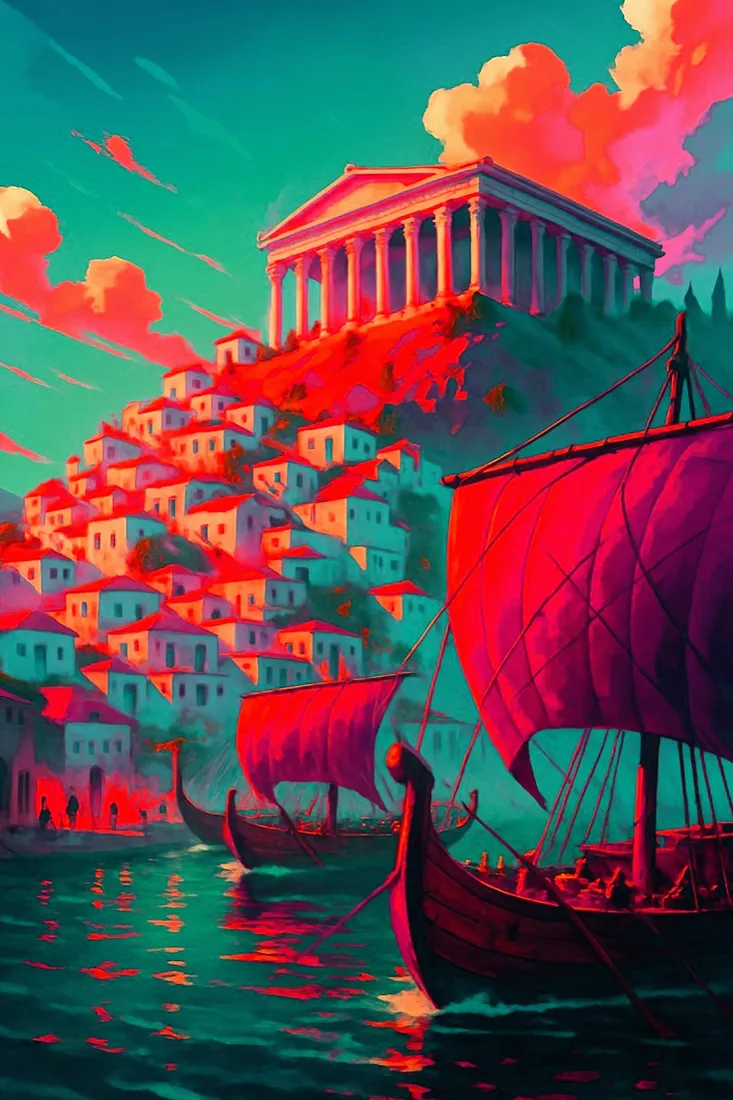
Every game on Saltsaddletrail is built around a map, but water and dust shape play in very different ways. Here is what changes when the ground beneath you turns to sea.
Why the map is the real main character
In most browser strategy games, the map is where every decision lives. It decides who your neighbours are, how long help takes to arrive, where resources sit and which places are worth fighting over. Two games with similar build queues can feel completely different because one is played across open water and the other across a dry frontier. Learning to read that difference is the fastest way to find the game you will enjoy.
Our six games split neatly. Seafight and Battle Pirates put you on the water directly, steering ships or sending fleets. Grepolis and Ikariam build empires on islands, where the sea sits between everything. The West and WildGuns take place on land, across a frontier where roads, distance and territory shape play. Each kind of map creates its own rhythm, its own risks and its own social life.
None of these is better than the others. They suit different temperaments. Some players love the tension of open water, others the slow, careful geometry of islands, and others the human scale of a frontier town. The sections below walk through what each feels like in practice, so you can match the map to the way you like to spend an evening.
Open water: speed, exposure and the thrill of pursuit
On open water, the map is mostly empty space, and that changes everything. In Seafight, you steer your ship directly and fights happen in real time; being in the wrong place for a few seconds matters. The sea feels alive because monsters and rival captains can appear at any moment, and that tension is the game’s great pleasure. It rewards attention and quick judgement over long-term planning.
Battle Pirates uses open water differently. The ocean is divided into sectors filled with outposts, computer-run forces and other players’ bases, and you send fleets out rather than steering a single ship around for hours. Distance and positioning still matter, but the planning happens in the shipyard and the base layout. The common thread is exposure: on water, there are few places to hide, and threats arrive quickly.
If you enjoy pursuit, timing and a little danger every session, open-water games are your territory. If you want a calmer evening, they can feel tiring, because the sea rarely lets you relax completely. Players who love them tend to talk about the moment a fight turned in their favour, which is a good sign that what they enjoy is the immediacy.
Islands: geography as a slow, beautiful puzzle
Island maps sit halfway between land and sea. In Grepolis and Ikariam, your towns sit on islands, and water separates you from almost everything you need. That creates a wonderful strategic puzzle: which island to expand to, who your close neighbours are and how long a fleet or convoy takes to cross. Travel times become a resource in their own right.
Ikariam pushes this hardest. Every island has a saw mill and only one luxury resource, so geography directly shapes your economy and your relationships. If your island makes wine and you need marble, the map tells you exactly who to befriend or where to found your next colony. Grepolis uses islands for military geometry, where armies need ships to cross and fleets protect convoys, so naval escort is part of every attack.
Island games suit planners. They reward players who look ahead, who enjoy thinking about distances and who like the slow satisfaction of an empire spreading across an archipelago. They are less frantic than open water, but they still have bite, because an island can be cut off and a convoy can be caught. The pleasure is in seeing the whole board at once.
The frontier: roads, territory and the human scale
Frontier maps feel the most personal. In The West, the map is something your character walks, taking jobs at specific places and travelling between towns and forts. Distance matters because time spent travelling is time not spent working, and the map fills with player towns that become little communities. It is a strategy map, but it is also a neighbourhood, which gives it unusual warmth.
WildGuns treats the frontier as contested territory. You raise a camp, gather resources and expand, while alliances argue over valleys and frontier lines. Artifacts add flashpoints that draw players into particular regions for a while. Unlike open water, land maps have edges and choke points, which makes defence more about position and alliance cover than about spotting threats on an empty horizon.
Frontier games suit players who think in places and communities. They are often the friendliest for newcomers because the scale is human and the rhythm is slower. If the idea of a town noticeboard or a land office full of rivals appeals more than a broadside, you will probably feel at home here. The dust gets into your boots in the best way.
Matching the map to your evenings
So which map is yours? Start with how you like to spend time. If you want an active, hands-on evening, choose open water, and Seafight in particular. If you want planning and a long campaign, choose islands, with Grepolis for gods and alliances or Ikariam for trade. If you want short check-ins and a human-scale community, choose the frontier, with The West for character and WildGuns for territory.
Many players on our desk run two games side by side, one from each kind of map. A frontier or island game for the morning and a sea game for the evening make a lovely pairing, because their rhythms do not clash. A queue-based game never minds you leaving it; a real-time game rewards the evenings you give it. Mixing them keeps both fresh and stops either becoming a chore.
Whatever you choose, give the map time to teach you. The first week on any of these worlds can feel confusing, because you do not yet know your neighbours, your routes or your strengths. By the third week, the map will start to look like a story you are part of. That moment, when you glance at the board and recognize every name around you, is why these games endure.