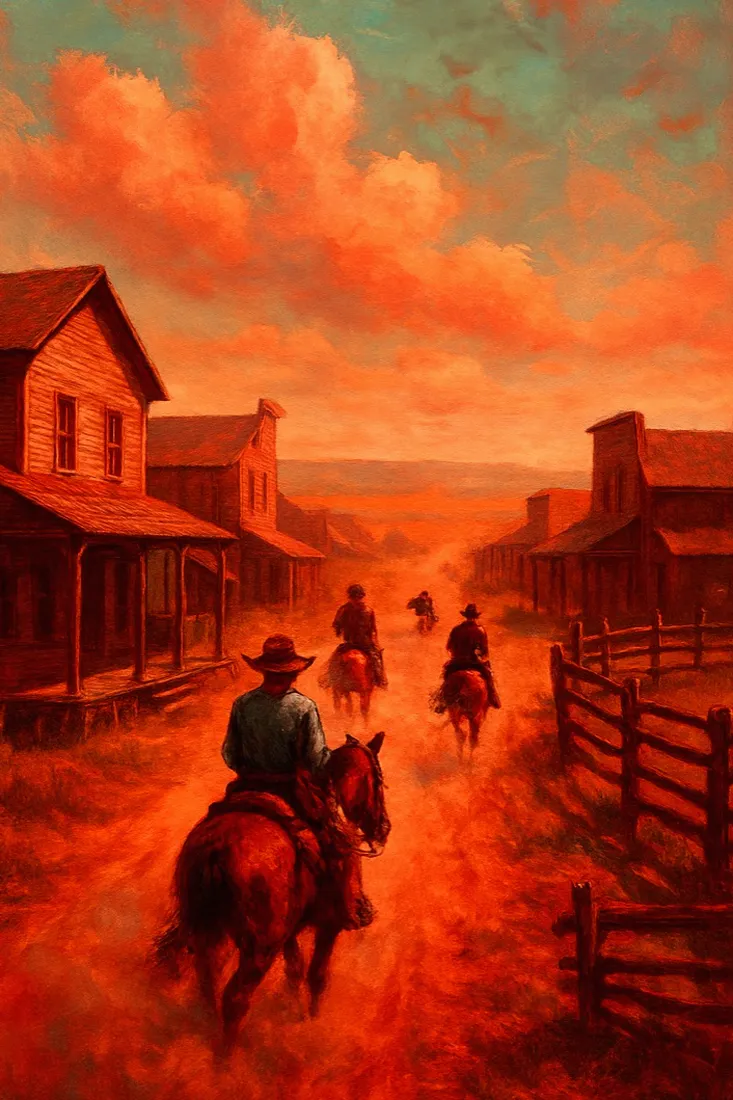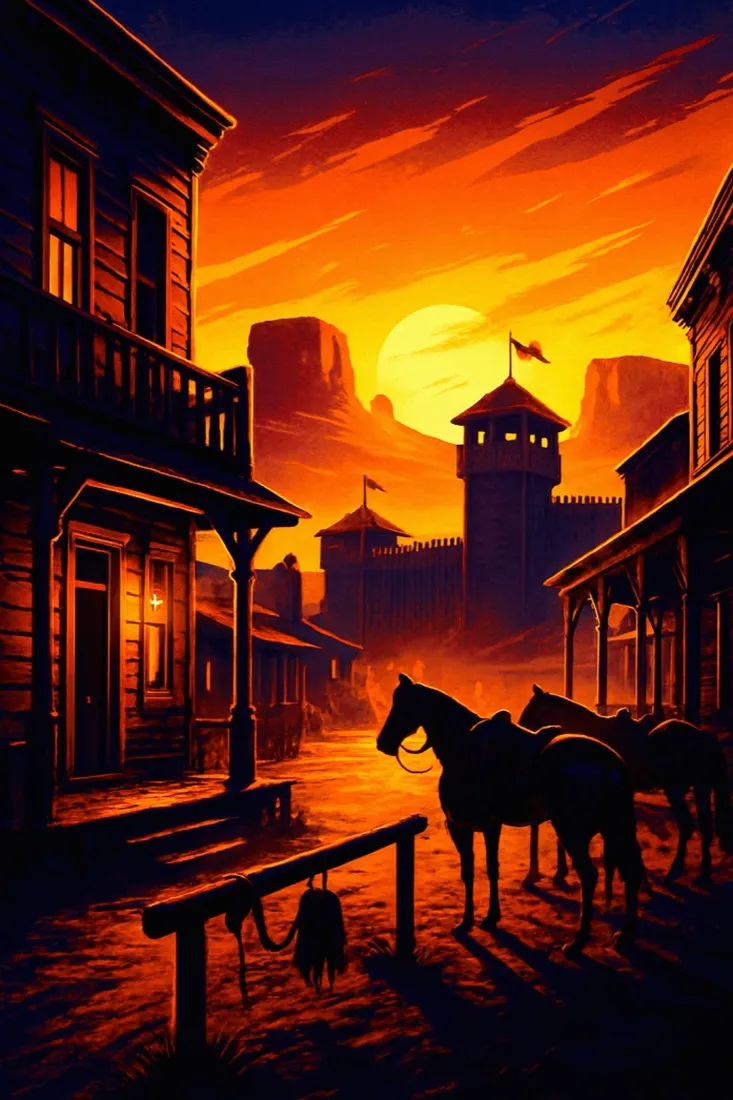
Most frontier games hand you a revolver and point at a saloon. The West hands you a job board. On our first evening we picked fences and herded cattle, watched an energy bar drain, and wondered whether this was really a Western at all. By the end of the first week we had a reputation in town, a better hat, a class choice we had argued over, and a fort on the horizon that we badly wanted to help defend.
That slow burn is the whole design. The West is a browser role-playing game where progress comes from work, quests and the people around you rather than from a single heroic sprint. It plays in a desktop browser, it asks for short visits, and it has the most generous structure for a player who never spends anything. That is why it leads Saltsaddletrail, a few lengths ahead of the island empires and the gunboats.
Jobs, energy and the slow pleasure of a full queue
The heart of The West is the job. You walk your character to a spot on the map, choose work suited to your skills and set it running. Jobs return experience, money and sometimes useful items, and they draw on energy, which refills over time. That rhythm is perfect for a busy week: queue a few tasks over breakfast, check back at lunch, line up the evening batch before dinner. It never feels frantic, and it never punishes you for having a life.
Better jobs need better skills, which is where the long game lives. Every level grants one attribute point and three skill points to spend as you like, and the choices genuinely matter. Stamina helps with exhausting work, aiming helps in duels and fort fights, and the right gear pushes you over thresholds for richer jobs. We spent an embarrassing amount of a snowy Saturday comparing two hats. That is the kind of game this is, and we mean it fondly.
Duelist, worker, soldier or adventurer: choosing who you are
The four classes give the frontier its personalities. Duelists live for the challenge in the street, workers make jobs and town building their speciality, soldiers shine in the organized chaos of fort battles, and adventurers lean into the exploring side of the territory. You do not have to decide on day one, which we appreciated; a few days of plain work teaches you which part of the game you actually enjoy before the choice locks your path.
We went worker on our main account and duelist on a second, and the two felt like different games by the second week. The worker became the town’s quiet backbone, pouring effort into buildings that helped every resident. The duelist spent evenings watching the street, picking fights it could win and learning painfully about the ones it could not. Neither path is a trap, and both feed into the same shared community, which keeps the server feeling whole.
Towns, forts and the night the whole street turns out
Towns are where The West stops being a solo job queue. Players found them, councillors help run them, and every building residents work on gives advantages to the whole community. Joining an active town in your first days is the single best decision you can make. Ours had a patient founder who answered questions at odd hours, a noticeboard full of plans, and a running joke about the one resident who never contributed to the church.
Forts take that cooperation to the map. Only a town founder or councillor can build one, the site must be a marked fort location, the builder needs at least eighty energy points, and construction takes eight hours. Once forts stand, fort battles bring attackers and defenders together at a set time, and suddenly the quiet frontier fills with dozens of characters taking positions. Our first one was confusing, loud and marvellous. By the third we had a role and knew our place on the wall.
Events, crafting and the calendar that keeps the trail lively
The West is not frozen in amber. The official site keeps a running list of seasonal events, and when we checked, the Day of the Dead 2026 event was scheduled from October 28 to November 16, alongside a Halloween speed challenge. Events bring their own quests and collectibles and give long-time residents a reason to log in with fresh purpose. The site was also announcing Quebec as open, which got a cheer from this Canadian desk.
Crafting rounds out the economy. You craft the tools and items your work demands, and a good recipe becomes something townmates ask you about. Premium currency exists and can smooth the grind, and the game does show random item mechanics, so a little self-awareness helps. But the core loop of jobs, skills, town and forts runs on patience, not purchases. We reached the satisfying middle of the game without spending a cent, and nothing felt walled off.
The first stretch of The West
- Do the opening quests in order; they quietly teach the job map, energy and how to read a skill requirement.
- Join an active town by day three. Look for a busy noticeboard and a founder who answers in chat.
- Bank your first skill points on stamina-friendly picks until you know which class tempts you most.
- Watch one fort battle as a spectator or late joiner before committing to a role in the next one.
- Keep a short list of the jobs that pay best for your build and queue them before bed.
What we love
- Short check-ins fit a working week without ever feeling like a chore.
- Four classes that really do change how the same frontier plays.
- Towns give newcomers a home and a purpose from the first few days.
- Fort battles are the best coordinated evening in browser Westerns.
What grates
- The first evening is slow; the charm only shows after several days.
- The interface is busy and shows its age in places.
- Fort battle timing can land awkwardly for players in western time zones.
The crew The West wants
The West suits the patient player who likes to see a character grow by inches, enjoys being useful to neighbours and wants a game that fits around work, school or a long commute. If you crave constant action, look at the sea games instead; if you crave belonging, start here.
Bottom line on The West
The West earns the top spot because it respects your time and rewards your loyalty. Jobs give the day a gentle rhythm, skill choices give the weeks a direction, and towns and forts give the whole thing a human warmth that most browser games never find. It starts slowly and asks you to trust it. Trust it for a week, join a lively town, and the frontier will feel like yours.