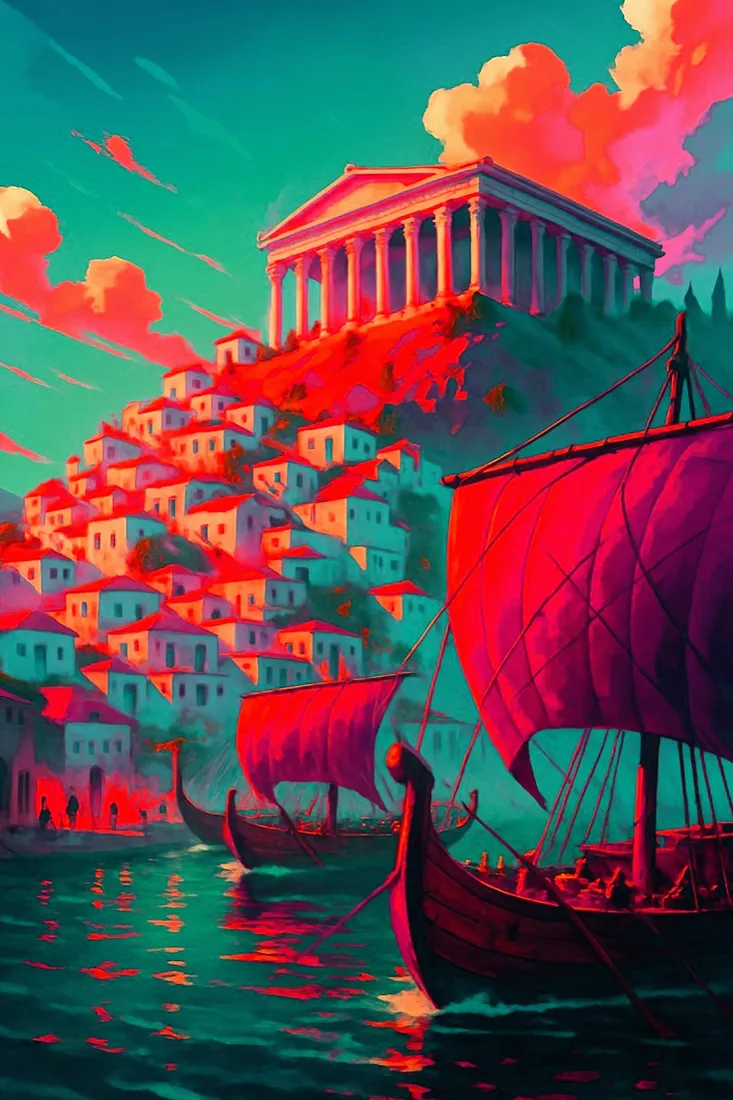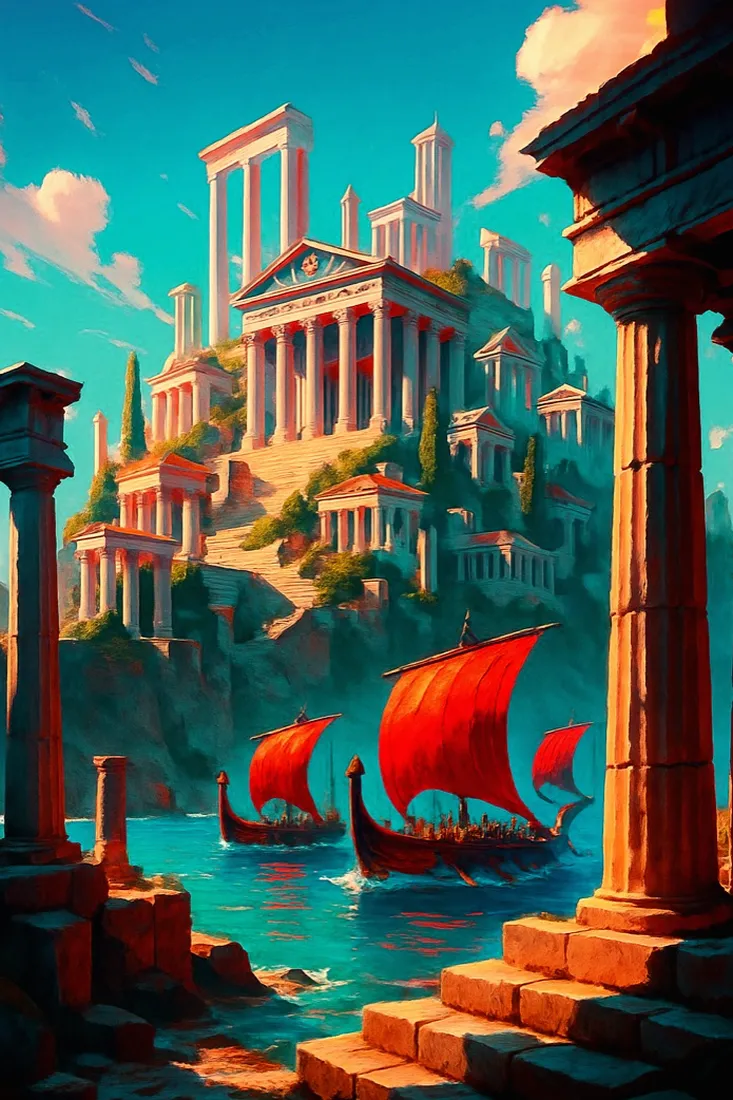
Grepolis starts the way all good city builders should: with something small and slightly shabby. A handful of buildings on an island, a few citizens, a harbour that barely deserves the name. The promise is that this polis becomes a metropolis over time, and for once the promise is honest. Within a fortnight our little town had a temple, an academy humming with research and a navy that made the neighbouring island much more polite.
What lifts Grepolis above a standard build-and-raid game is the mythology. You worship a god, gather favour, and spend it on divine powers and on creatures straight out of a classics textbook. It plays in a desktop browser and also through an official mobile app, which is unusually handy for this kind of long-haul strategy game. It sits second on our trail, a whisker behind the frontier.
From a shabby harbour to a proper metropolis
The building game is clear and satisfying. You upgrade a small set of core structures that cover resources, storage, housing, the military and the temple, and the Academy lets you research more than thirty technologies, from faster construction to the abilities you will need to take another city. The queue rhythm suits short visits: plan a few upgrades, check back in a couple of hours, adjust. Planning ahead becomes its own quiet pleasure.
The island layout matters more than it first appears. Your neighbours are close, travel times across water shape every decision, and your first expansion is a genuine strategic choice rather than a formality. We chose a crowded island next to an active alliance and spent a nervous week learning diplomacy. Grepolis rewards that kind of planning, and punishes a player who builds blindly without looking at who lives next door.
Favour, divine powers and choosing your patron
The gods are the heart of the game’s identity. InnoGames names Zeus, Poseidon, Hera, Athena and Hades as divine guardians, and Artemis is also available to worship. Each god brings different powers: the official page notes that Hera can help boost production in your polis while Poseidon can help weaken enemy sea power. Your temple gathers favour over time, and spending it well is one of the game’s richest decisions.
Choosing a patron is half flavour, half strategy. We worshipped Hera on a builder account and enjoyed the steady economic lift, then tried Poseidon on a second city and leaned into naval play. Neither felt like a wrong answer, which is the mark of a well-balanced system. The gods also decide which mythical units you can call on, so your patron quietly shapes your army as well as your economy.
Pegasus over the water and a Minotaur at the gate
Mythical units are what make a Grepolis battle report fun to read. Alongside ordinary soldiers and ships, you can recruit creatures like Pegasus, the Hydra and the Manticore, plus Medusa, the Cyclops and the Minotaur, each tied to a particular god. They are expensive in favour and resources, which keeps them special, and seeing one join a defence for the first time is a proper moment.
The naval game is equally important. Cities sit on islands, so armies need transport and fleets protect them, which turns every attack into a small puzzle of timing and escort. Losing a convoy because we forgot the warships was a lesson we only needed once. The combination of land, sea and mythical units gives Grepolis more tactical texture than most of its peers, without ever needing fast reflexes.
Alliances, timing and the honest cost of a long campaign
Grepolis invites you to forge alliances with thousands of real players, and the mid game is really an alliance game. Good alliances share intelligence, coordinate attacks to land at the same moment, and send help when a member is hit. Ours had a cheerful leader on Atlantic time and a quartermaster on Pacific time, which meant someone was nearly always awake. That coverage is worth more than any single upgrade.
The flip side is commitment. Big operations are timed, and a serious alliance will ask you to be present at set hours. Premium currency exists to speed things along and make life easier, and players who spend have a smoother path. A patient free player can still thrive, especially as a reliable builder or defender, but expect the waiting to grow as your cities do. Treat it as a season-long campaign, not a quick game.
The first stretch of Grepolis
- Follow the early tasks closely; they pay resources that keep the first build queue moving.
- Pick a god with your plan in mind: Hera for steady growth, Poseidon if you want the sea.
- Scout your island neighbours before upgrading defences, and note who is active.
- Start Academy research early so key technologies are ready when your second city beckons.
- Apply to an alliance with members across time zones, and introduce yourself in their chat.
What we love
- The gods and their powers add real decisions, not just decoration.
- Mythical units make every battle report worth reading twice.
- Island geography turns expansion into a genuine strategic choice.
- An official mobile app makes quick check-ins easy away from the desk.
What grates
- Serious alliances expect you online at set times for operations.
- Waiting periods grow long in the mid game for free players.
- Older worlds can feel settled; a newer world is the friendlier start.
The crew Grepolis wants
Grepolis suits players who love a long campaign, enjoy alliance chat and coordination, and want mythology woven into their strategy. It is ideal if you can check in several times a day, and the mobile app helps if your desk time is limited. Lone wolves will find it tougher going.
Bottom line on Grepolis
Grepolis is the most complete empire builder on our trail. The city game is clear, the gods give it a personality, mythical units make battles memorable, and island geography keeps every move meaningful. Its demands grow with your ambitions, and alliance timing can be a real commitment. Join a good group on a fresh world, and you have a campaign that can comfortably fill a long winter.