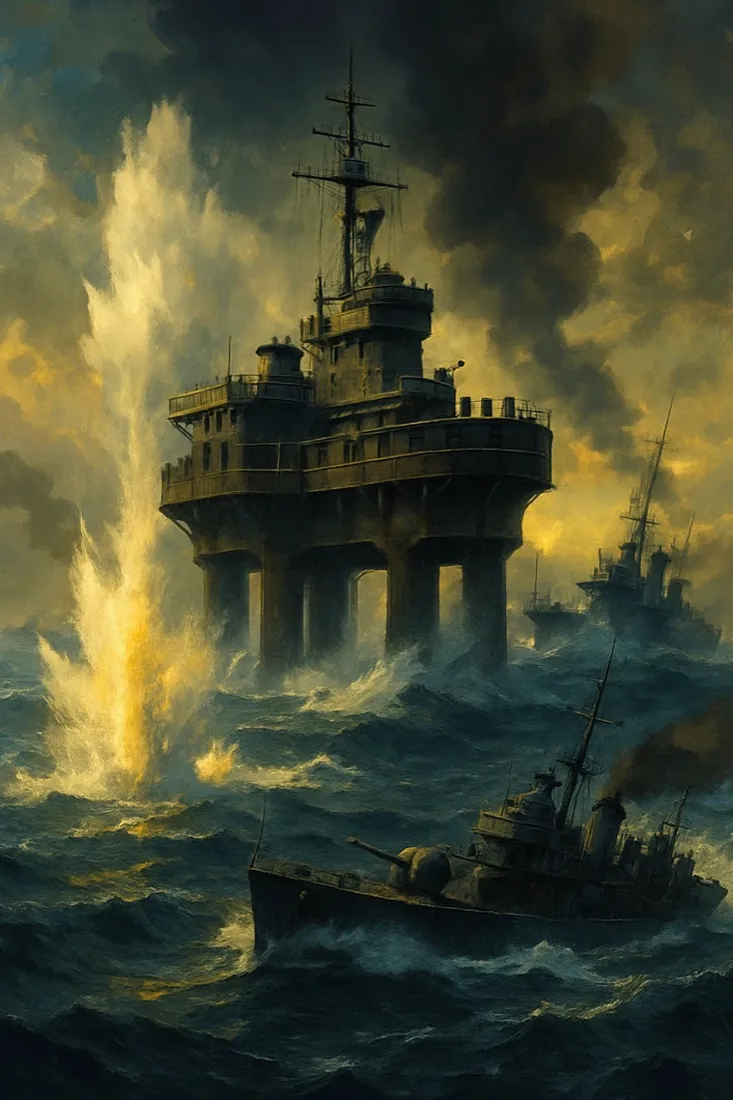
Every other game on this list asks you to plan and wait. Seafight asks you to steer. You load in, your ship sits on open water, and within a minute you are lining up cannon fire on something unpleasant with too many teeth. Bigpoint describes it as a real-time fantasy adventure on the high seas, and that is exactly the feeling: immediate, a little chaotic, and very pirate.
Your ship is your home, your fortress and your whole identity here, and the long game is about making it fearsome. You hunt monsters, capture other ships for booty, chase treasure and pour everything back into upgrades. It runs in a desktop browser with no download. It ranks fourth on our trail because the sailing is a joy, while the pressure to upgrade weighs harder on a free player than anywhere else.
Cannon smoke and the first monster that bites back
Combat is the draw. You click to sail, select targets and fire, choosing your ammunition as the fight unfolds; cannonballs come in grades from stone up through iron and steel, and harpoons join the arsenal for monster work. It is simple to learn and surprisingly tactical once you start reading enemy patterns. Our first big sea monster sank us twice before we learned to keep moving and stop parking alongside it.
The giant creatures lurking in Seafight’s waters are the best part of the solo game. They give the sea a sense of danger even when no rival captain is near, and hunting them is a natural way to fund your next upgrade. A good evening session has a lovely shape: patrol, fight, retreat to repair, set out again. It is the closest thing on our trail to a classic arcade evening, all inside a browser tab.
Your ship as sanctuary, empire and fortress
Bigpoint frames your vessel as your sanctuary and your fortress, and the game backs that up. Upgrading and customizing your ship is the long arc of Seafight: stronger hulls, better guns, more stores of ammunition and gear. Every capture and every treasure find feeds that arc. There is real satisfaction in returning to an area that once scared you and sending its monsters to the bottom in a few volleys.
Treasure hunting gives the sea a second purpose. You chase hidden riches and booty, and the official pitch talks about reading the symbols correctly, which captures the small puzzle element nicely. Seasonal events add unique items and ammunition variants over the year. We enjoyed how often the game found a reason to send us somewhere new, even after our main routine had settled into familiar waters.
Captains, guilds and the rival on the horizon
Seafight is a multiplayer sea, and other captains are part of the weather. You can capture rival ships and steal their booty, and they can do the same to you, which keeps every trip slightly tense. Joining a guild softens the edges considerably: friends to sail with, advice on where to hunt, and backup when a stronger captain takes an interest. You can also choose to sail alone, which suits a quick evening.
The honest note is that experience and gear count for a lot. A captain with a heavily upgraded ship is a serious threat to a newcomer, and there is no hiding from the fact that progress speeds up considerably for players who buy premium items. We found that sticking to monster hunting and guild company kept the game fun while we grew, and that the open water felt far friendlier once we had a few allies.
Who keeps sailing past the first month
Seafight is at its best for the player who wants an active evening rather than a passive check-in. It is not a game to queue and forget; the fun is in being at the wheel. That makes it a lovely change of pace from the city builders on this list, and a natural pairing with one of them. We often ran Ikariam in the morning and Seafight after dinner.
It also shows its long history. The interface carries layers of features added over the years, and the early hours throw a lot of icons at you. Push through, though, and the core holds up remarkably well: steer, fire, survive, upgrade, repeat. Plenty of browser games are prettier, but few deliver that simple, physical pleasure of manoeuvring a ship under fire with such reliability.
The first stretch of Seafight
- Follow the early missions; they teach movement, targeting and switching ammunition under pressure.
- Hunt smaller monsters first and keep moving during fights instead of trading broadsides at rest.
- Spend early plunder on survivability before firepower; a ship that stays afloat earns more.
- Join a guild by the end of the week for advice, escorts and safer hunting grounds.
- Watch the event calendar and plan longer sessions around the ones that suit your ship.
What we love
- Real-time sailing and firing makes every session physically engaging.
- Sea monsters give the world danger even with no rival nearby.
- Treasure hunts and events keep sending you somewhere new.
- Guilds make the open sea far friendlier for newer captains.
What grates
- Premium items speed progress a lot; free captains climb slowly.
- The interface is crowded with years of layered features.
- Upgraded veterans can make some waters unwelcoming for newcomers.
The crew Seafight wants
Seafight is for players who want to be hands-on, who like the arcade rhythm of patrol, fight and repair, and who have proper evening sittings to give. Pair it with a slower builder for the mornings. If you prefer planning to steering, choose one of the island games instead.
Bottom line on Seafight
Seafight delivers the purest pirate fantasy on our trail: your ship, your wheel, your cannons, and a sea full of things to sink. The real-time combat still satisfies, monsters keep the world dangerous, and a good guild makes it sociable. Its upgrade pressure is the steepest here, so set your expectations. Sail it for the thrill, not the race, and it is grand fun.